ROE (Return on Equity) – Why It Matters for Stock Analysis
What Is ROE (Return on Equity)?
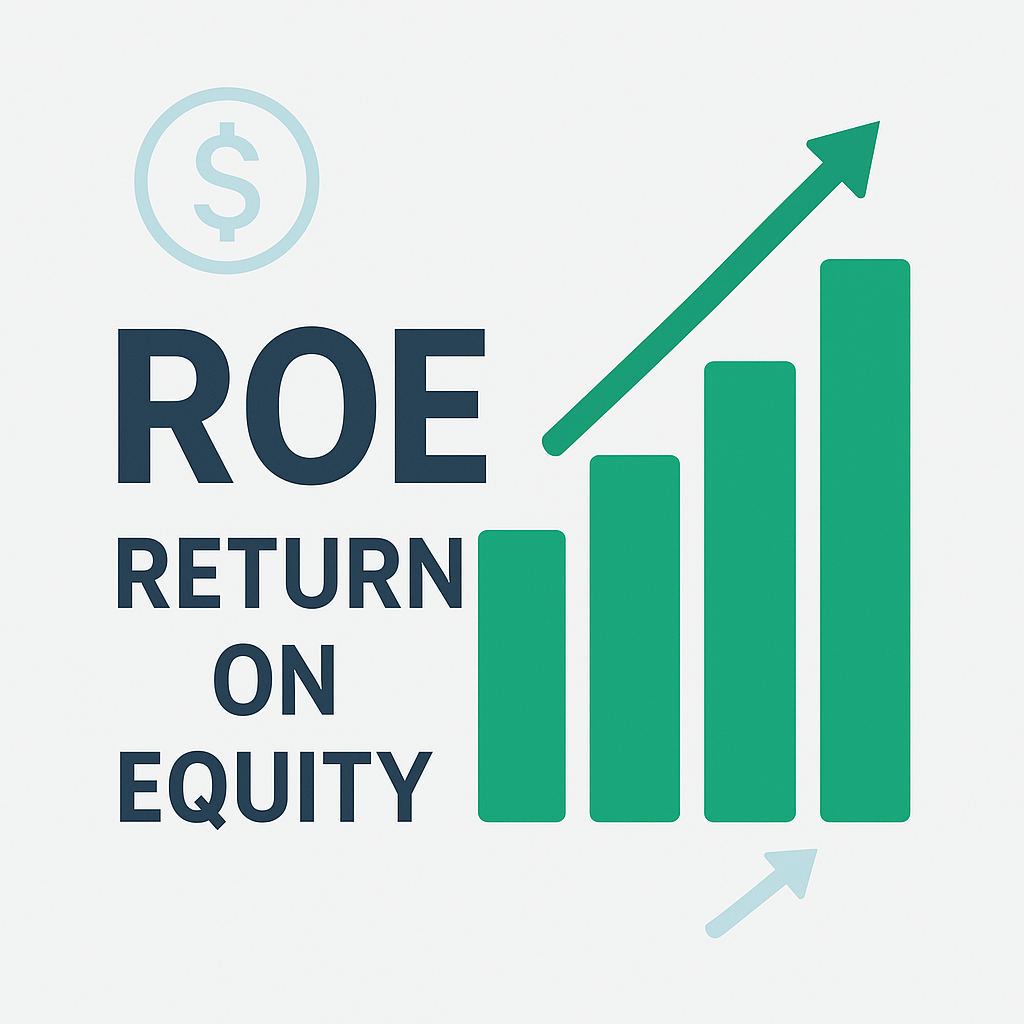
If you’ve ever wondered how efficiently a company is using its money to make more money, ROE, or Return on Equity, is the answer.
At its core, ROE measures how much profit a company generates for each dollar of shareholder equity. Think of it like this: if you invested $100 in a lemonade stand, how much profit would it return each year? That’s essentially what ROE tells you about a business.
The formula is simple:
So, if a company earned $1 million in profit and has $10 million in equity, its ROE is 10%.
Why Is ROE Important for Stock Analysis?
1. Spotting Quality Companies
ROE helps you identify businesses that know how to reinvest profits wisely. Companies with consistently high ROE often have strong business models and competitive advantages.
2. Comparing Across Industries
ROE makes it easier to compare companies within the same sector. For example, if two banks have different sizes but similar ROE levels, you can see which one is more efficient in using shareholder money.
3. Sign of Management Effectiveness
A healthy ROE shows that management is putting your money to good use. Low or declining ROE can signal inefficiencies, while stable or growing ROE often points to strong leadership.
4. Dividends and Growth Potential
Companies with high ROE often have the ability to reinvest earnings for growth, or they may share profits with investors in the form of dividends. Either way, a strong ROE can mean better long-term returns.
A Word of Caution
ROE is powerful, but it’s not perfect. A company can artificially boost its ROE by taking on too much debt, since debt lowers equity. That’s why it’s best to use ROE alongside other metrics like debt-to-equity ratio, earnings yield, and price-to-book value.
Final Thoughts
ROE is like a window into a company’s financial engine. By showing how efficiently profits are generated from shareholder money, it helps investors separate the solid, well-managed businesses from the ones just spinning their wheels.
When analyzing stocks, I always like to ask: “If I owned part of this company, is management using my money wisely?” ROE helps answer that question.